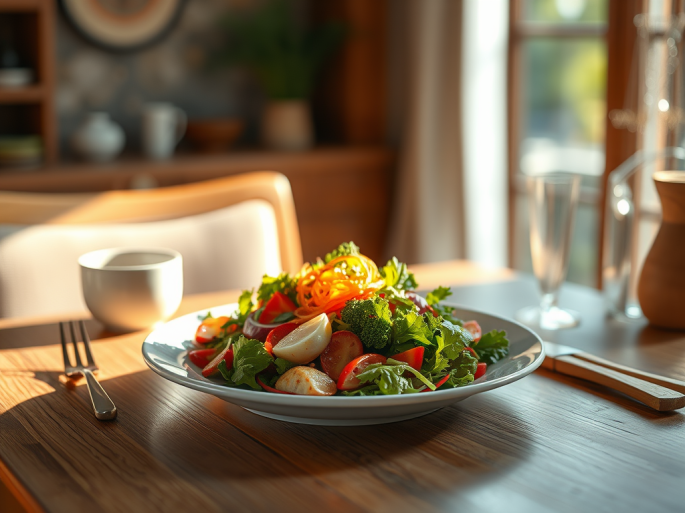
Mindful Eating: Transform Your Relationship with Food

In today’s fast-paced world, it’s easy to rush through meals without fully enjoying or noticing what you eat. Mindful eating offers a powerful way to reconnect with your food and your body’s natural signals. By slowing down and paying attention, you can cultivate a healthier and more enjoyable relationship with eating.

What Is Mindful Eating?

Mindful eating is about being present and fully aware during meals. It involves tuning into the flavors, textures and smells of your food while also paying attention to hunger cues and emotions. Unlike traditional dieting, mindful eating isn’t focused on restrictions, but instead on listening to your body’s needs and enjoying food without guilt.

Benefits of Mindful Eating

Practicing mindful eating offers several benefits:

  • Better digestion: Eating slowly and chewing thoroughly can improve digestion and nutrient absorption.
  • Weight management: Being mindful helps prevent overeating, making it easier to recognize when you’re full.
  • Enhanced enjoyment: Savoring each bite can make meals more pleasurable and satisfying.
  • Reduced emotional eating: Mindfulness can help you identify triggers for stress eating and make healthier choices.
  • Improved relationship with food: By removing guilt and judgment, mindful eating fosters a more positive outlook on eating.

How to Practice Mindful Eating

Here are simple steps to incorporate mindful eating into your daily routine:

  1. Eliminate distractions: Turn off the TV, put your phone away, and sit at a designated eating spot.
  2. Take a moment of gratitude: Before eating, pause to appreciate your food—where it came from, who prepared it, and its nourishment.
  3. Engage your senses: Notice the colors, textures, and aromas while you’re eating your meal. Take your first bite slowly and savor the flavors.
  4. Chew thoroughly: Aim to chew each bite around 20-30 times, which aids digestion and allows you to enjoy the full taste of your food.
  5. Eat slowly: Put your utensils on the table or on your plate in between bites and take breaks during your meal.
  6. Tune into hunger and fullness: Check in with yourself throughout the meal to gauge your hunger level. Stop eating when you feel satisfied, not stuffed.
  7. Acknowledge your emotions: Notice if you’re eating due to stress, boredom, or sadness. If so, consider non-food ways to cope, like deep breathing or a short walk.

Mindful Eating Exercise

Try this exercise with a small piece of fruit, like a raisin or a slice of orange:

  • Hold the fruit and observe its shape, color, and texture.
  • Bring it to your nose and smell it.
  • Place it in your mouth without chewing and notice how it feels.
  • Slowly chew and pay attention to the sensations and flavors.

Mindful eating is a simple but impactful practice that encourages a balanced and joyful approach to food. It may take time to break old habits, but each mindful bite brings you closer to a healthier and more harmonious relationship with eating.

Start small and be patient with yourself. Over time, mindful eating can become a natural and rewarding part of your life.

Here’s to savoring every bite and living well!

Embracing Walking Meditation

In our fast-paced world, mindful living offers a path to greater presence and peace. One powerful way to cultivate mindfulness daily is through mindful walking meditation. Unlike traditional seated meditation, walking meditation invites movement, nature, and awareness into each step. This practice can be done anywhere—on a walk through the park, a stroll down your street, or even pacing around a small room. Whether you’re new to mindfulness or looking for fresh ways to deepen your practice, mindful walking offers a beautiful way to connect with the present moment.

What is Walking Meditation?

Walking meditation is a form of meditation that combines movement with awareness. Rather than rushing from one place to another, you slow down, walking in a way that allows you to notice the sensations of your body and the world around you. It’s less about reaching a destination and more about being fully present in the journey, using each step as an opportunity to embrace and practice mindfulness.

This practice can be tailored to fit your day, whether you have just a few minutes or want to spend more extended time in nature. As you walk, you can focus on the feeling of your feet touching the ground, the movement of your muscles, the sounds around you, and even the rhythm of your breath. Walking meditation bridges the gap between traditional seated meditation and the active world, making it a versatile and accessible practice for all.

How to Practice Walking Meditation

If you’re new to mindful walking, here’s a simple guide. Aim to walk somewhere quiet if possible, but know that you can practice anywhere—even a bustling city street!

1. Set Your Intention

Begin by setting a clear intention to walk mindfully. Remind yourself that this isn’t about exercise or reaching a destination; it’s about being fully present. You might say to yourself, “I am here to connect with each step.”

2. Start by Focusing on Your Posture

Stand tall, yet relaxed. Feel the soles of your feet connecting with the ground. Bring your attention to the present moment by taking a few deep breaths. Notice how your body feels and allow yourself to arrive fully in this moment.

3. Take Slow, Deliberate Steps

Begin to walk slowly, lifting one foot, moving it forward, and placing it down with awareness. Pay attention to the sensations in your legs and feet—the pressure, the texture of the ground, and the movement of each muscle.

4. Coordinate Breath and Steps

Notice your breathing as you walk. Some people find it helpful to synchronize their breath with their steps—for example, taking two steps as you breathe in and two as you breathe out. You might choose a pattern that feels natural to you, or simply allow your breath to flow freely.

5. Engage All Your Senses

Mindful walking is not just about your body; it’s about experiencing the world around you. Notice the sounds, smells, and sights as you walk. Feel the air against your skin, listen to the rustling of leaves, or observe the light. If your mind starts to wander, gently bring it back to the sensations of walking.

6. Return to the Present When You Drift

It’s natural for thoughts to arise as you walk. When you notice your mind wandering, simply acknowledge it without judgment and bring your attention back to the sensations of walking. The act of returning to the present is an essential part of mindfulness practice.

7. End with Gratitude

When you’re ready to finish, pause for a moment and take a deep breath. Reflect on the experience with gratitude for the time you spent connecting with yourself and the world. You might place your hands on your heart and take a few moments of silence to close the practice.

The Benefits of Walking Meditation

Walking meditation has a range of mental, emotional, and physical benefits. Here are a few ways it can enhance your mindful living journey:

Reduces Stress and Anxiety: Focusing on the present moment helps to quiet the mind, reducing stress and anxiety as you step away from worries and into awareness.

Enhances Focus and Concentration: Walking meditation trains the mind to stay with one task at a time, which can improve focus in other areas of your life.

Increases Body Awareness: By tuning into each movement, you become more connected to your body, helping you notice tension, stiffness, or areas where you can bring more ease.

Connects You with Nature: Walking meditation offers a unique opportunity to experience the natural world with mindfulness, which can foster a sense of connection and gratitude.

Boosts Emotional Resilience: Regular practice can help you build a habit of returning to the present, which can support emotional balance and resilience over time.

Tips for Integrating Walking Meditation into Daily Life

Start Small: Begin with just a few minutes each day. As you become more comfortable, you can extend your sessions.

Practice Anywhere: Mindful walking doesn’t have to be a big event. Try it while walking to your car, in the grocery store, or as you go about your daily routines.

Combine with Traditional Meditation: Walking meditation is a great complement to seated meditation. If you find seated meditation challenging, walking meditation might be a refreshing alternative.

Use Visual Reminders: Place reminders around your home or on your phone to take a few mindful steps throughout your day.

Back and Better Than Ever: My Health and Wellness Journey Continues

Hello, friends! It’s been a while since my last post, and I’ve missed connecting with all of you. Life has a way of throwing unexpected curveballs, and sometimes, we need to take a step back to recharge, refocus, and regain our sense of balance. That’s exactly what I’ve been doing over the past few years—and I’m happy to say that I’m back, feeling more refreshed and energized than ever!

During my time away, I took the opportunity to focus on my own health and wellness journey. As someone who loves sharing tips and insights with all of you, it’s important for me to walk the walk, not just talk the talk. Here’s what I’ve learned during this period of reflection:

1. The Importance of Rest

I’ve always believed in the power of rest, but I wasn’t practicing it as much as I needed to. Sometimes, in our busy lives, we forget that rest is just as important as exercise, nutrition, and mental wellness. This break allowed me to recharge and understand that rest is a form of self-care, not a luxury.

2. Mindfulness Matters

I spent a lot of time focusing on mindfulness, learning to live in the present moment. Whether through meditation, yoga, or simply taking a few deep breaths, mindfulness has helped me stay grounded and reduce stress. If there’s one thing I encourage everyone to incorporate into their routine, it’s mindfulness practices.

3. Listening to My Body

I realized I hadn’t been paying attention to what my body was truly telling me. Whether it was the need for more hydration, better nutrition, or a different form of movement, tuning in to my body’s needs has been transformative. Learning to listen is key to long-term wellness.

4. Healthy Habits Take Time

I’ve recommitted to my health goals, but I’ve also embraced the fact that meaningful change takes time. I’m no longer in a rush to hit the next milestone but instead focused on building sustainable, healthy habits that will serve me for years to come.

What’s Next?

I’m thrilled to be back and ready to share more health and wellness content that’s rooted in real-life experiences. Whether you’re looking for tips on fitness, nutrition, mental health, or simply finding balance in your daily life, I’ve got plenty of exciting posts coming your way.

Thank you for sticking with me and for all of your support. I can’t wait to dive back in and continue this journey together, stronger and better than ever! Stay tuned for more updates, and as always, let’s prioritize our health—mind, body, and soul.

Until next time, take care of yourself and stay well!

Warmly,

Brittany M. Edwards

Indigestion Issues?

Indigestion, also known as dyspepsia, is the uncomfortable feeling you get in your belly usually during a meal or after. It usually comes with bloating, nausea or vomiting, belching, and gas. In some cases, you can feel it while or after having a drink (alcoholic or non-alcoholic). It can occur after eating spicy or fatty foods, food high in acidity, and from overeating. It is usually the symptom of an underlying problem like gastroesophageal reflux disease (GERD), ulcers, gallbladder disease, or irritable bowel syndrome just to name a few.

If you are having indigestion issues and are tired of taking prescription or over-the-counter medications, you might have already started looking into natural remedies to help you overcome those issues. There are many natural remedies to choose from, but there are a few that stand out the most and actually top of the list when helping ease the pain and comfortability of indigestion and all that it brings.

There are some preventive measures that can be taken to minimize indigestion symptoms. These would be the first line of defense to combat indigestion. Such as frequently eating smaller meals. You can do this by eating a small meal or snack every 2 to 3 hours. Also, eating at a slower pace can help your indigestion; it also reminds you to eat more mindfully. Limiting your caffeine intake and increasing your water intake are also good ways to help with indigestion. Make sure not to eat too late in the evening, this actually causing the heartburn, acid reflux, and indigestion that you are working to combat. Adding whole foods to your diet such as lean meat, fruits and vegetables are a great way to get your body healthy and avoid upset stomach and avoiding spicy foods.

Sometimes it can be hard to remember to do all these things (especially avoiding spicy foods in my case), so there are other natural remedies out there that will help with indigestion as well. These are the top few I found while doing my research:

  • Baking soda – acts as an antacid
    • Mix about 1/2 a teaspoon baking soda with a cup of water.
    • Can drink up to 2 to 3 times daily.
  • Ginger – promotes healthy digestion
    • You can add ginger as a spice to your meal.
    • You can make yourself a ginger tea to drink.
    • You can add 2 teaspoons of ginger juice and 1 teaspoon of honey to a warm cup of water to drink.
  • Apple Cider Vinegar – has alkalizing effect
    • Mix a tablespoon of ACV and a teaspoon of honey in a cup of water.
    • Can drink up to 2 to 3 times daily.
  • Fennel Seeds – contain volatile oils that help reduce nausea and control flatulence
    • In a cup of hot water, add 2 tablespoons of fennel and leave it to steep for a while. Strain the water and add a teaspoon of honey. Can drink up to 2 to 3 times daily.
    • You can chew a spoonful of fennel seeds.
    • You can dry roast, grind, and sieve fennel seeds. Take 1/2 a teaspoon of this powder along with water. Follow this remedy twice daily.
  • Chamomile – calms the stomach and soothes spasms in the intestinal tract
    • You can take a half-teaspoon chamomile tincture up to three times daily.
    • You can have a nice cup of chamomile tea.
  • Peppermint – the oil soothes intestinal muscle spasms and helps relieve nausea
    • You can take one or two capsules containing 0.2 milliliters of oil per capsule three times a day, between meals.
    • You can have a nice cup of peppermint tea.
  • Aloe vera juice – reduces inflammation
    • If you have a 1/2 cup of aloe vera juice before a meal, it will settle your stomach.
    • It is also a laxative, so be mindful that you will probably need to be near a bathroom.

There are plenty more remedies out there, what are some you have tried?

Post-Holiday Workout

I hope everyone had a blessed and wonderful holiday celebration with their loved ones. I am sure you ate great and now have a little belly action as a result. I am here to tell you that all is not lost and give you some small tips to help you get back to feeling great!

If you have not already started enjoying the weather we are having in Chicago, please go for a light 15-20 minute walk. This will get you started by warming up your muscles and allow you to fully reap the benefits of a post-holiday workout. Make sure you drink lots of water prior to and after your walk.

After you go for your walk, you are going to need to stretch out those muscles you just warmed up. Nothing too major, you can do a toe touch, hamstring and calf stretch and make sure to stretch your arms and neck as these can be the tightest areas in your body and where most people carry their stress.

From there, you should begin with setting your intention: “Today I want to workout for (choose your time frame).” Then, begin your workout. I’ve listed below some exercises you can use in your practice; however, you are more than welcome to create your own workout.

  • Jumping Jacks: 3 reps of 15
  • Squats: 3 reps of 15
  • Lunges: 3 reps of 15 on each leg
  • Arm Circles: 30 forward & 30 backward
  • Push-Ups: 10-20 (or however many you can do with proper form still intact)
  • Plank: Hold for 30 secs – 1 minute
  • Alternating Push-Up Plank: 3 reps of 15-20
  • Tricep Dip: 3 reps of 10-15
  • Hip Raise: 3 reps hold for 20 secs each
  • Sit-Ups: 3 reps of 10-15
  • Leg Spreaders: 3 reps of 15
  • Supine Bicycle: 3 reps of 20 to each side

Cycle through each exercise and rest for 30 secs – 1 minute in between reps. You can also take a rest for 15-30 secs every time the exercise switches focus to a different area of the body.

I hope you find this helpful and that you have a great new year of healthy choices in front of you. Enjoy!

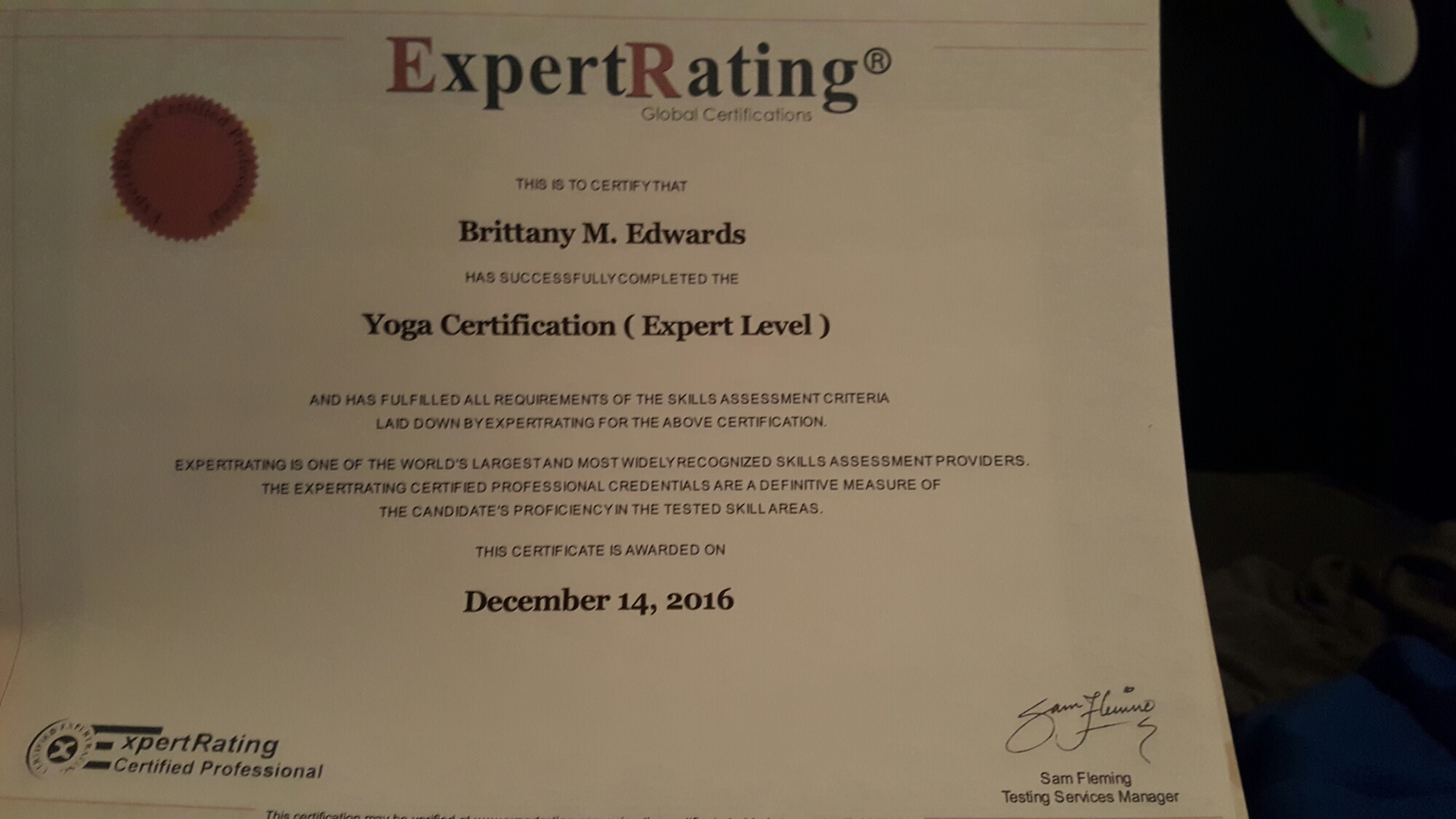
Yoga Certification Complete!

Well, I finally did it. I had decided that yoga was for me a long time ago. It’s low impact and keeps me exercising. Back in 2008, I fractured my spine and for a long while could not hyper-extend my back. Now I’m working on a backbend again! It has definitely been an exciting and trying road, but one I could never regret. I love sharing knowledge and I can’t wait to really put my certification to use and begin teaching yoga to others. More excitement to come!!

A Must Share – 21 Ways to Nourish Your Mind & Body

Good Morning!

Ever wonder why there are so many ways to take of not only your body, but your mind and soul/spirit too? Well I found something that pretty much lays everything out there for you in a nutshell.  These findings in the photo shared are actually what motivated me to want to share the information I’m learning. I myself, have already begun to follow some of the suggested ways mentioned in the photo below. I struggle with inflammation, insomnia, depression and anxiety and also finding out what would help me combat these ailments and still lead a healthy and productive life.

Now as always, the information given is just a suggestion (or a stepping stone). However, I encourage you to try incorporating some of these soulful ways into your life and routine. They literally make a world of difference. Let me know how it goes.


Learn how to manage stress!:

Ayurveda. What is it?

Ayurveda is one of the world’s oldest healing systems, beginning in India over 5,000 years ago. Its principal belief is that all things are connected, whether living or not. Ayurveda is a Sanskrit word that literally translates as “the science of life” or “the wisdom of life” or “the knowledge of longevity”. According to Ayurveda, in order to be healthy your mind, body, and spirit have to be aligned and balanced with the universe. Being healthy is not just the exclusion of disease in the body.

Ayurveda has a few basic principles:

  • Reaching your unique state of balance in your whole being (body, mind, spirit) is fundamental to your well-being.
  • There are 3 doshas (that describe who we are): vata, pitta, and kapha – I’ll get into these more in future posts.
  • If you are imbalanced, get rid of what’s causing the problem. If you are still experiencing imbalances, counteract with opposite (ei. spicy foods cause indigestion so eat something less spicy).
  • Always support your digestive system, it is here that the good nutrients is absorbed and the bad waste is expelled.
  • The universe is made of the 5 basic elements air, water, fire, earth, and space.

When you hear about Ayurveda, mostly it’s about learning about your body’s unique composition of the principle energies (doshas) and keeping them balanced. Vata (space & air) is the energy of movement, pitta (fire & water) is the energy of digestion or metabolism, and kapha (earth & water) the energy of lubrication and structure.

Stress & It’s Problems

Stress

This lovely 6 letter word is the cause of so many health problems today. It is also one of the toughest things to alleviate; even dealing with stressful situations can be difficult. There’s no way to completely get rid of stress; however, you can learn to cope.

So what is stress?

Stress is your body’s way of responding to any kind of demand or threat.

The thing is stress can be good and bad for us. Certain types of stress can help us while other types can land us in the hospital with heart attacks, strokes, and mental breakdowns. Stress can literally kill you. That’s why it’s important that we try our best to handle our stressors in a healthy manner.

Firstly, it’s imperative to know what your stressors are. Some are very common:

  • Work/Career
  • School
  • Kids
  • Money

These are just to name a few. You name it, it can be a stressor. The most common way to keep your stress levels low is to make sure you exercise and eat properly. There are, however, more ways to keep your stress levels in a safe range. Personally I like to go for walks around my neighborhood. I find hidden gems that I didn’t even notice always driving around and it actually lifts my mood.

I’m a person that gets bored doing the same things pretty easily. So there are a few other ways I like to cope with stress:

  • Coloring/Painting
  • Meditation
  • Deep breathing
  • Sports & recreation
  • Reading books
  • Journaling
  • Have a good cry

These are just a few things that help me deal with my stressors. I will tell you this, nothing substitutes for being under the care of doctors whose job it is to help us. I didn’t always think this at first; however, therapy is definitely something that can’t be substituted.